Second Floor Decks
Elevated decks purpose-built to extend your main living space while making smart use of the area below.
What Is a Second Floor Deck?
A second floor deck (often called an elevated deck, walkout deck, or a deck above a basement) is a deck that’s raised above grade—usually connected to the main floor and supported by posts, beams, and footings (or helical piles). This type of deck is common in the GTA because it creates a true outdoor living space without sacrificing yard area, and it can take advantage of ravine views, walkout basements, or sloped lots.
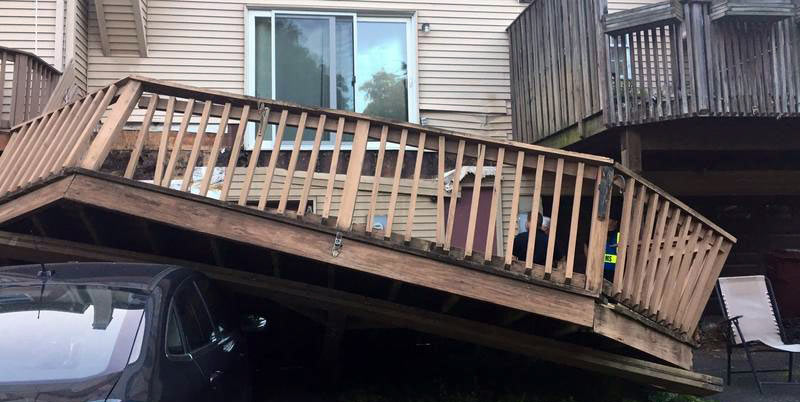
Where ground-level decks are mostly about surface finishes, second floor decks are structure-first projects. The loads are higher, the consequences of poor design are bigger, and the details matter: beam sizing, post layout, ledger connection, railing code, and especially drainage and waterproofing when there’s living space below. Because of this, proper structural deck design and thoughtful second floor deck construction are critical from the very beginning.
Homeowners often ask how much weight an elevated deck can hold, how it’s framed, or whether it can be waterproofed after the fact. These questions don’t have one-size-fits-all answers and depend heavily on structure, intended use, and planning from day one.
Second floor decks are a specialized type of custom deck, requiring site-specific design, engineering, and construction rather than off-the-shelf layouts.
Common Mistakes (What to Watch Out For)
Second floor decks fail in predictable ways. Most issues come from shortcuts hidden behind finished materials.
- Poor space planning beneath the deck: Relying on excessive posts to simplify structure may be acceptable structurally, but it often severely reduces usability below. Without intentional planning, the space under a second floor deck can become cluttered, unusable, or impossible to finish properly.
- Water management shortcuts (if waterproofed): Missing slope in drainage systems, poor flashing, or “waterproofing” that isn’t part of a complete system—often leading to leaks, rot, and staining below.
- Undersized structure: Beams, posts, or footings not designed for real loads—especially when a roof, pergola, or hot tub is planned now or later.
- Improper stair geometry: Inconsistent rise and run, oversized spans without proper support, narrow landings, poor transitions to grade, or no consideration for snow and ice conditions.
- Railing and guard issues: Posts not properly blocked or designs that don’t meet deck railing code, guard height, and spacing requirements.
- Ignoring future scope: Not planning for privacy screens, lighting, drainage tie-ins, or a future waterproofed ceiling beneath the deck.
- Misunderstanding deck load requirements: Designing for “typical use” instead of real-world loads like gatherings, furniture, planters, or future upgrades.
Structural Considerations
A second floor deck is essentially an outdoor floor system. The structure must be designed for:
• Live loads and dead loads (people, furniture, finishes)
• Point loads (hot tubs, heavy planters)
• Additional loads (roofs, pergolas, privacy walls)
• Lateral resistance (wind and long-term movement)
One of the most commonly overlooked issues in elevated decks is proper anchorage and uplift resistance. Posts must be securely anchored to footings or helical piles. Beams must be properly connected to posts. Joists must be restrained against both downward and upward forces. Without correct connectors, hardware, and continuous load paths, decks may feel solid under normal use but perform poorly during high winds or over time.
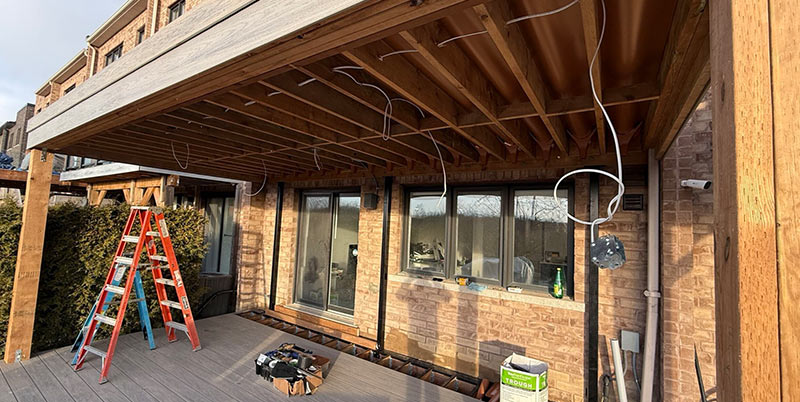
When a second floor deck is intended to be waterproofed, deck drainage becomes a structural consideration, not just a finishing detail. The framing layout must account for drainage paths, slope within the waterproofing system, penetrations for posts and supports, and how water is collected and discharged away from the structure. These requirements often influence joist spacing, beam placement, blocking, and overall deck framing strategy, and must be planned before construction begins.
When the goal is to create a dry space below, a second floor deck effectively becomes a waterproof deck system, requiring coordinated structure, drainage, and detailing.
Support strategy (concrete footings vs. helical piles)
Both concrete footings and helical piles can support an elevated deck, but they behave differently depending on soil conditions. Typical residential concrete footings are poured to frost depth, often without testing actual soil bearing capacity. Helical piles, by contrast, are installed to an engineered torque specification, providing real-time confirmation of capacity and allowing piles to be advanced deeper if required. For second floor decks with higher loads, tight access, or variable soils, helical piles are often a reliable support option.
Beam spans and post placement
This is where “it looks fine” can still be wrong. Clean designs often require larger members or steel options to reduce post count, open up sightlines, and maximize usable space under the deck.
Roof loads (if applicable)
If the deck has a roof—or may have one in the future—the structure must be engineered for it from day one. Adding a roof later without proper planning is one of the most common reasons elevated decks need to be rebuilt.
In many cases, homeowners compare second floor decks to covered decks, especially when weather protection, roof structures, or year-round usability are part of the plan.
Designing for future use
Even if a deck starts as an open platform, future additions like privacy screens, or a hot tub significantly change load requirements. These future additions should be considered during second floor deck design, not after construction is complete.
Design Options
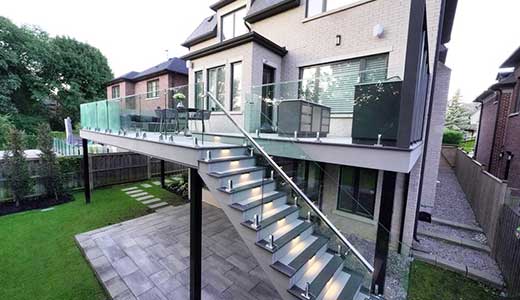
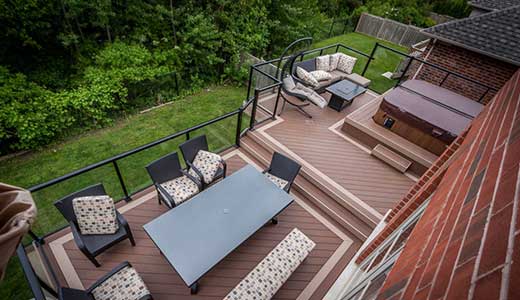
Second floor decks don’t have to feel bulky. Good design makes them feel intentional, light, and well integrated with the home. Design decisions also affect deck stairs, railing layouts, and how the deck integrates with the rest of outdoor space.
Common design choices that work well on elevated decks include:
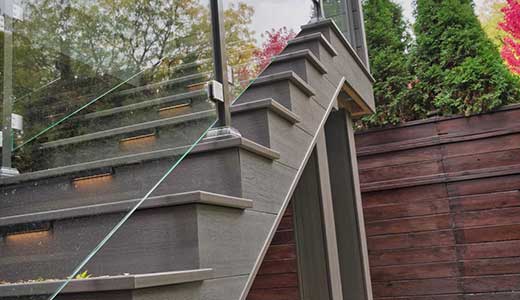
- Frameless or glass railings for uninterrupted views (especially on ravines and walkouts)
- Modern aluminum picket railings for clean lines and durability
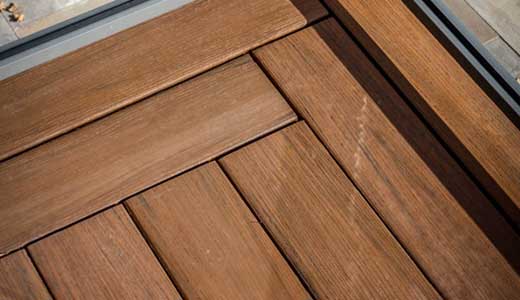
- Picture-frame decking borders to elevate the finished look
- Integrated stair lighting for safety and nighttime usability
- Privacy screens, particularly in tighter GTA lots
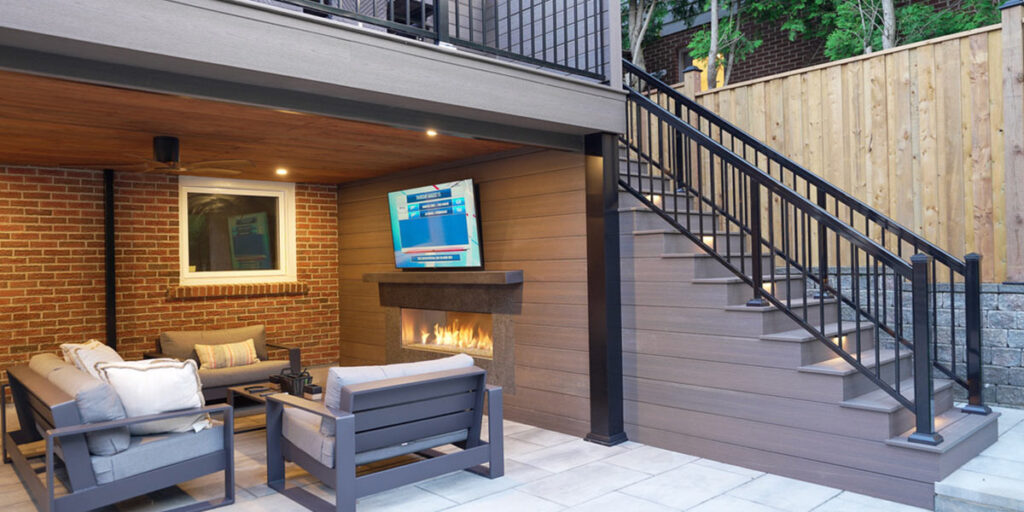
- Finished ceilings under the deck when creating a seating or storage area below
- Intentional underside design to avoid wasted or unusable space beneath the deck
Material considerations:
- Composite or PVC decking for low maintenance and consistent appearance
- Hardwood decking for a premium look with a realistic maintenance plan
- Low-voltage lighting systems to extend usability and improve safety
Common Use Cases
Second floor decks are usually built for one or more of the following reasons:
Walkout basement homes
You gain main-floor outdoor access while keeping the yard functional and connected below.
Sloped lots or ravines
An elevated deck creates a level, usable outdoor space while taking advantage of views.
Creating a covered living zone underneath
When paired with a proper waterproofing system, lighting, and ceiling finish, the space below an elevated deck can become a valuable outdoor room.
Outdoor kitchens and entertaining layouts
Raised decks work well for dining and BBQ zones, with stairs leading down to patios, pools, or garden areas.
In many cases, the decision to build an elevated deck is driven as much by what happens under the deck as what happens on top of it.
Costs & Budget
Second floor decks cost more than standard decks for one simple reason: structure and compliance. Larger members, additional engineering, more complex stairs, and guard systems all add complexity compared to ground-level builds.
Key budget drivers include:
- Height and stair complexity
- Railing type (glass, aluminum, or custom systems)
- Decking material (PVC, composite, or hardwood)
- Waterproofing and drainage systems, including full waterproof deck systems when the space below matters
- Roof or pergola loads
- Site access limitations
- Permits, zoning reviews, and engineering coordination
A practical way to budget is to decide early:
- Is the deck purely an upper platform, or does the space below need to be dry and finished?
- Are future upgrades like a roof, privacy screens, lighting, or a hot tub planned?
If you want a realistic starting point, our budget estimator can help you understand how design choices and scope affect cost before moving into detailed planning.
Designing with the future in mind is almost always more cost-effective than rebuilding later.
Related Services
Second floor decks often connect to other scopes of work. Depending on your property, you may also need:
- Planning and permits (zoning, setbacks, lot coverage)
- Structural engineering coordination
- Waterproofing systems for usable space below
- Stair and landing integration with patios or walkways
- Lighting and electrical planning
- Stonework or hardscaping at grade
Book a Consultation
If you’re planning a second floor, elevated, or walkout deck in Toronto or the GTA, we can help you validate the plan before money gets spent in the wrong places.
A short conversation early in the process often prevents expensive design changes later.
A consultation typically covers:
- Site constraints and access
- Structural approach (including future roof planning)
- Drainage and waterproofing strategy
- Stair layout and safety
- Material and railing options
- Permit pathway and timelines